
The largest battery storage in the Nordics was built with precise teamwork
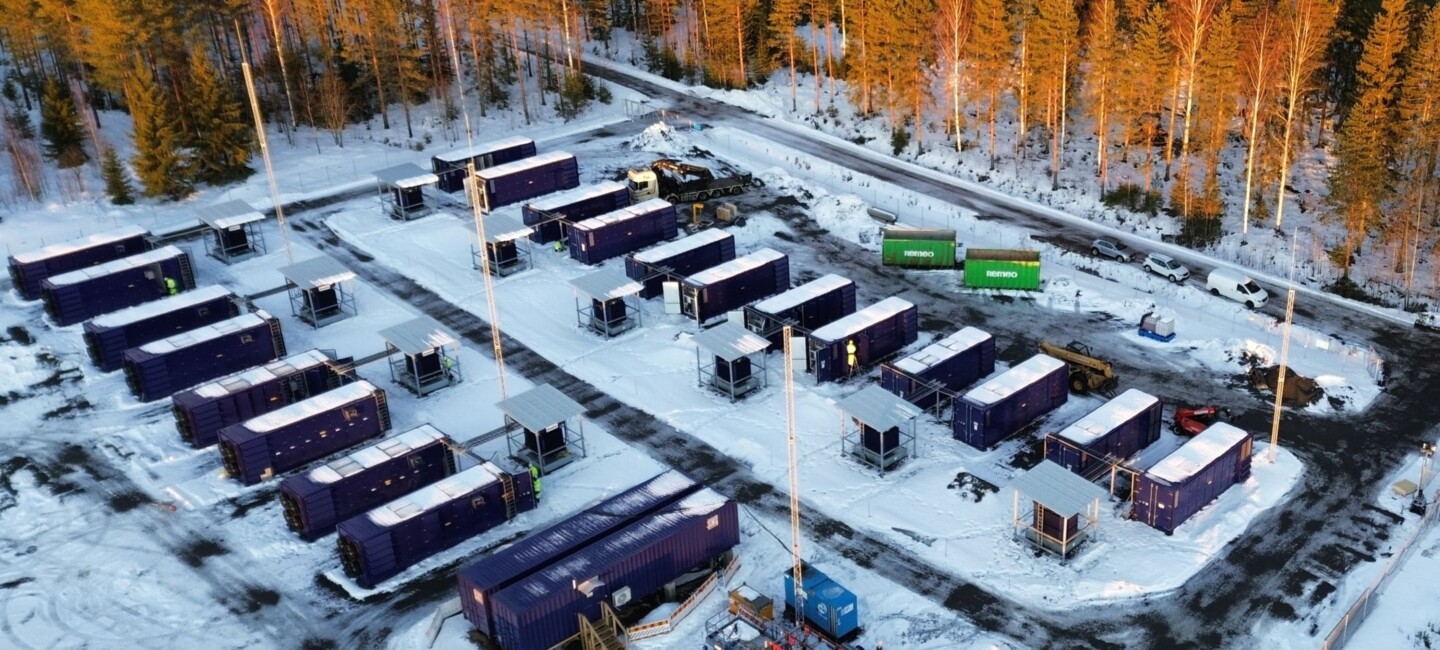
Twenty identical structures resembling shipping containers are lined up in two neat rows right next to each other, as if measured with a ruler. This is the brand-new, largest battery storage in the Nordic countries, Yllikkälä Power Reserve 2, which was put into operation in the first half of 2025.
The battery energy storage located in Lappeenranta has a nominal power of 56.6 megawatts and an energy density of 112.9 megawatt-hours. As the first battery energy storage in the Nordic countries, it can supply power to the grid at full capacity for two hours.
The battery energy storage operates in Fingrid’s reserve markets and supports Finland’s electricity grid by improving its flexibility and stabilizing fluctuations caused by renewable energy production. The project is commissioned by Neoen, the world’s largest independent renewable energy producer.
“The advantage of batteries in energy storage is the rapid response capability to fluctuations in electricity production and consumption in the grid, and they are increasingly used in the electricity market to balance consumption peaks. About 90 percent of the electricity from the battery energy storage can be reused,” says Neoen’s project manager Jouni Koskinen.
The infrastructure and electrical work of a battery energy storage require precision and collaboration
Destia has carried out the infrastructure and electrical work for the 0.7-hectare battery storage, which included the planning and execution of earthworks and foundation work, fence construction, electrical design, 110 kV cabling, and electrical and fiber optic cabling. The battery containers, battery packs, transformers, and inverters have been supplied by Nidec, which bears overall responsibility for the construction contract.
Building a battery energy storage of this scale is not an everyday occurrence for many, but the basic principles of earthworks and electrical contracting are also found behind the battery energy storage infrastructure.
“Installing the containers requires its own procedures, tools and work methods developed for this purpose, but otherwise, the basic work corresponds to other earthworks and electrical contracts. The project also involves a lot of coordination of deliveries and schedules, which has required precision, collaboration, and active communication with various stakeholders from the entire team. Everyone has been aware of the overall picture. We were well prepared for the different phases of the contract, and all installations were completed on schedule,” says Destia’s project manager Matti Toivari.
Battery energy storage construction has rapidly developed in recent years
Yllikkälä Power Reserve 2 is not Toivari’s first battery energy storage project in the area. In 2020, Destia and Nidec completed Yllikkälä Power Reserve 1 for Neoen in the same area, a battery energy storage of similar scale in terms of power, but with about half the energy capacity of its successor, which was the largest in continental Europe when completed. In the five years since, the work has developed significantly, but the previous experience has been beneficial in constructing the new storage.
“The development in the field is evident, for example, in equipment deliveries: the equipment is much more advanced than last time, and there are more integrated components in the storage. So, we have been able to learn new things, even though familiarity with the site and environment has brought benefits to the work,” Toivari says.
Safety is paramount in the installation of battery containers
The rows of battery energy storage containers not only look precisely measured, but each container has been installed accurately on top of 30-centimeter thick concrete foundations. Due to the fire risk posed by the batteries, special attention has been paid to fire safety during the design phase, and the fire department has also been involved in the project from the permitting stage.
“Fire safety has been addressed, among other things, with automatic extinguishing systems included in the containers, and there is also sufficient safety distance between the containers,” Koskinen explains.
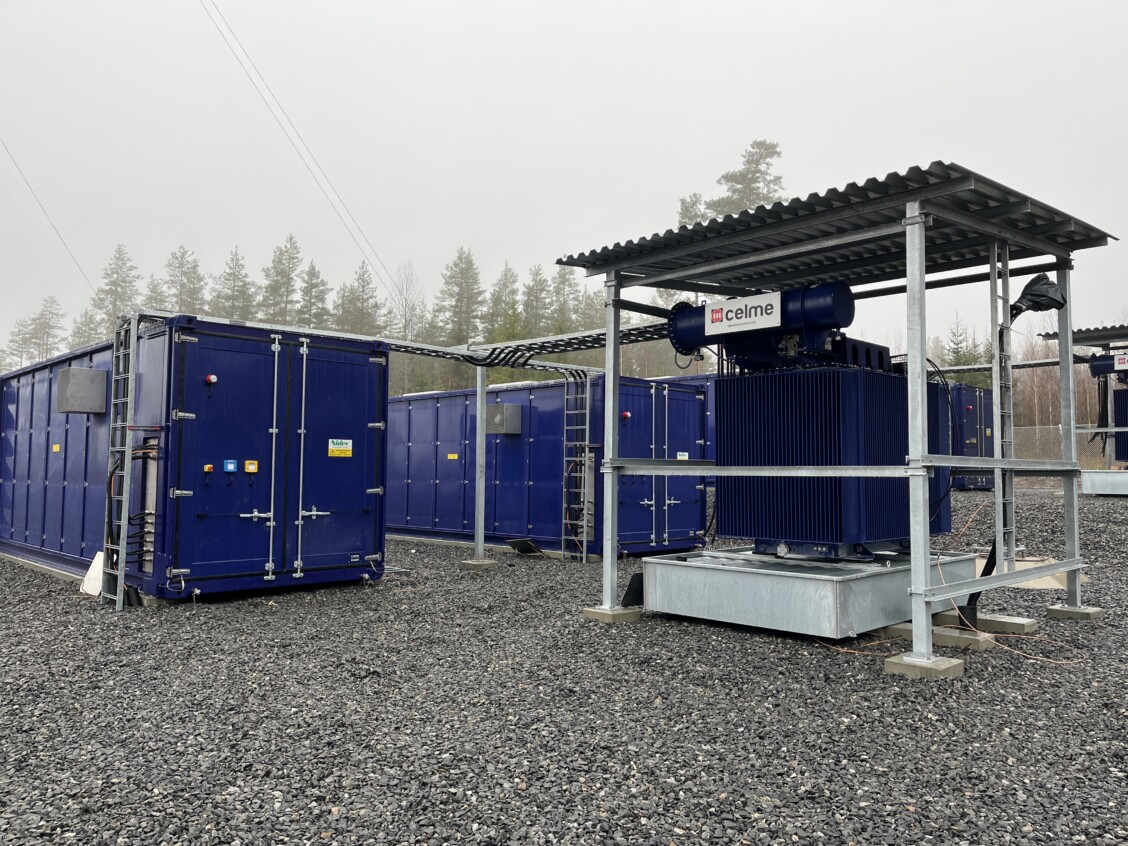
Each 57-ton container contains a battery module made up of 112 lithium batteries, inverters and transformers, cooling and heating systems, and safety systems. In addition to the battery containers, the storage consists of ten transformers rated at 33 kV and 4.4 megavolt-amperes, as well as a main transformer rated at 110 kV and 50 megavolt-amperes, which connects to a nearby substation via an underground cable.
The operation of the completed battery storage is managed remotely from France, where the operation of the batteries is optimized according to frequency electricity markets.
Main image of the article: Dirk Hammer / CMRE-Hammer GmbH